The Sound of Tomorrow
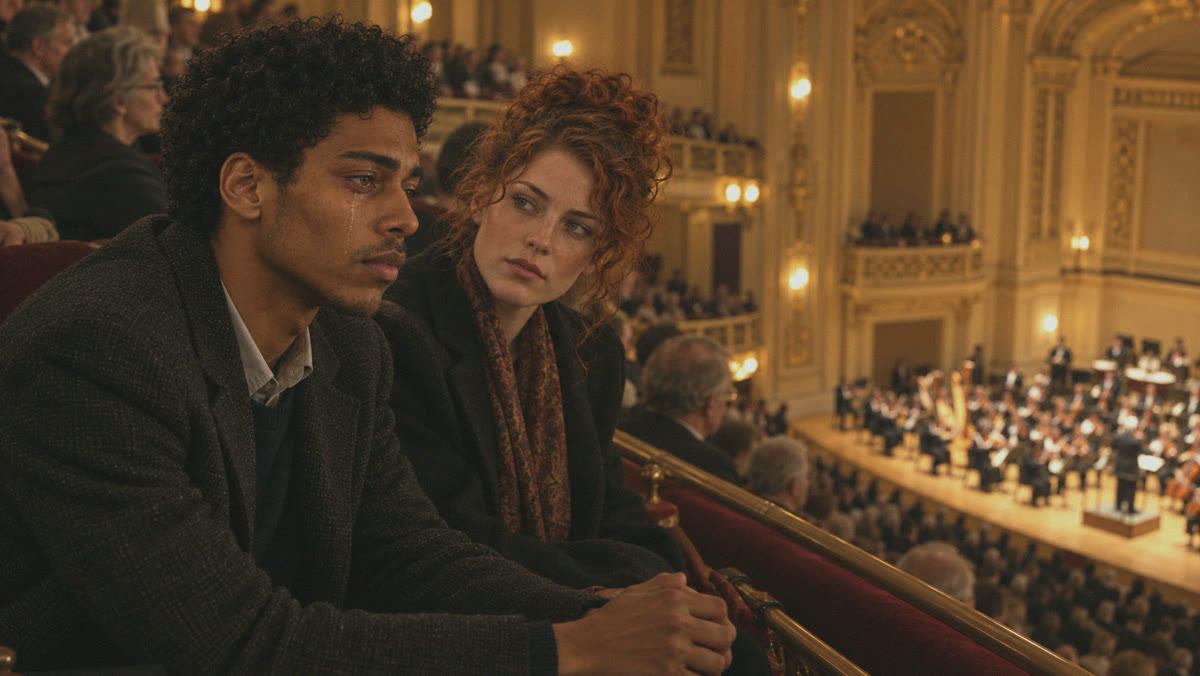
At Symphony Hall, Frederick hears Dvořák's Largo and recognizes the hymn his mother sang every Sunday. "So who does it belong to?" He writes Before the Morning, the record of his life, and the label shelves it. Eleanor proposes a way through: give them one record they can sell, and put this one in the contract as the next. "Every time somebody says 'first,'" he answers, "the real thing never comes."
“You can own the cup, but nobody owns the river.”
My mother sang it every Sunday
in a church with a broken door.
She said it came from the old folks,
and they had it from before.
And a stranger in a coat and tie
wrote it down so far away,
so who gave it to who?
And who gets to say?
Maybe a song is a river.
You can own the cup,
but nobody owns the river.
You just drink, and you pass it up.
You call it strange,
they'll call it new.
Just give the world a year or two.
Or ten. Or twenty.
Does it matter when?
I didn't write it for this Tuesday,
I didn't write it for your chart.
I wrote it for a kid I'll never meet
with a city in her heart,
who'll find it in a box somebody kept,
who'll play it in a room I'll never see.
You want to know what it'll fetch by Friday;
I want to know what it will mean to her, and me.
Every song that ever mattered
was a stranger at the door.
Every hymn my mother sang me
someone laughed at once before.
You can lock it in a cabinet,
you can file it with the rest,
but the river finds the ocean,
and tomorrow takes the test.
You call it strange,
they'll call it new.
Just give the world a year or two.
Just give the world,
just give the world,
just give the world —